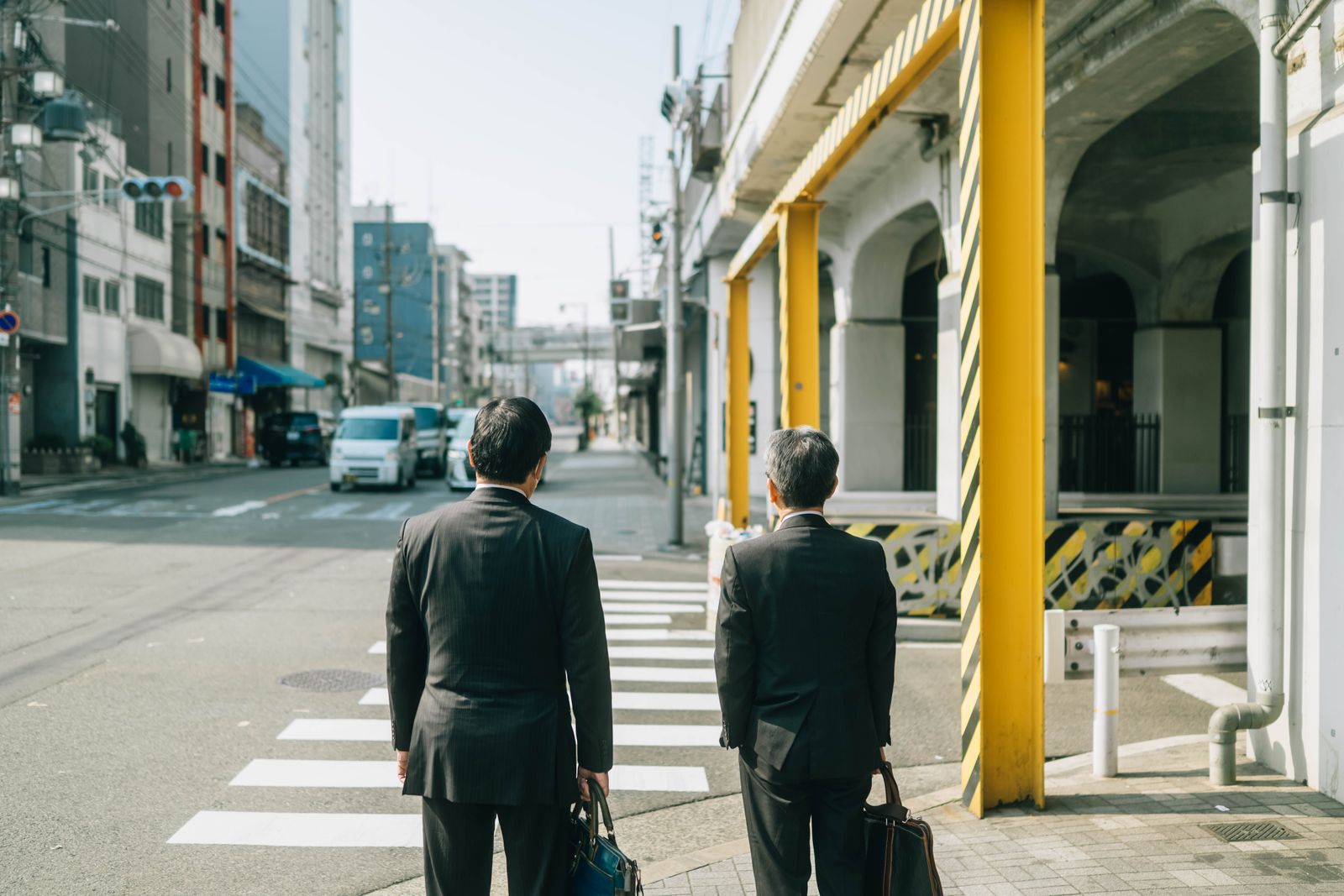
The visa behind most professional jobs in Japan
If you want to work in Japan as an engineer, an IT specialist, a marketer, a translator, or in many other professional roles, this is very likely the status of residence you will need. Its full name is "Engineer / Specialist in Humanities / International Services." In Japanese it is called Gijinkoku for short, from the first characters of its name.
You will see it on job advertisements, in contracts, and on the Immigration Services Agency's website. It is the standard work status for professional, knowledge-based jobs — and it is also the status that many people already living in Japan use when they change jobs.
This article explains, in plain words, who can get it, what immigration actually checks, and what happens after you arrive: changing jobs, bringing your family, and one day applying for permanent residence.
Three kinds of work under one status
The status covers three families of work. You only need to fit one of them.
1. Engineering and science work. Jobs that need technical knowledge in the natural sciences — mechanical engineering, software development, systems engineering, and similar work.
2. Humanities work. Jobs that need knowledge of law, economics, sociology, and other humanities or social science fields — for example accounting, planning, sales and marketing, or trading work that relies on that knowledge.
3. International services. Jobs that need ways of thinking or sensitivity rooted in a foreign culture. The official list includes translation, interpretation, language teaching at private companies, public relations and advertising, overseas trading, fashion and interior design, and product development.
One point is very important: the actual duties must genuinely require that specialist knowledge. Work that anyone can learn quickly through simple repetition — simple manual labour — does not qualify, even if the job title sounds professional. Immigration looks at what you will really do every day, not at the title on the contract.
Who qualifies? Education or experience
Immigration checks two things about you: your background, and the job itself.
For engineering, science, and humanities work, you need one of the following:
- A university degree — you graduated from a university after majoring in subjects related to the knowledge the job requires. The key word is related: what you studied and what you will do at work must connect. A diploma from a Japanese vocational college can also count: graduates of a professional training course at a senshu gakko in Japan who received the title of Senmonshi (or Kodo Senmonshi) are treated as meeting the education route, again if the field is related.
- Or 10 years of practical experience in work related to the field. Time spent studying the relevant subjects at university or a similar school can be included in those 10 years.
For international services, the route is different:
- The job must fall within the listed types of work (translation, interpretation, language instruction, PR, overseas trade, design, product development, and similar work), and
- You need 3 years or more of practical experience in work related to that job.
- There is one useful exception: if you are a university graduate and the job is translation, interpretation, or language teaching, the 3 years of experience are not required.
Here is a quick summary:
| Route | What you need |
|---|---|
| Engineering / science / humanities — degree | University degree in a related field, or Senmonshi from a Japanese vocational college in a related field |
| Engineering / science / humanities — experience | 10 years of related practical experience (relevant study time can count) |
| International services | A listed type of work plus 3 years of related experience — except university graduates doing translation, interpretation, or language teaching, who need no experience |
The job and the salary are checked too
Even with the right degree, the application can fail because of the job side.
The duties must match your background. Immigration compares your major or experience with the actual duties. A literature graduate hired to do pure programming, or an engineering graduate hired for unrelated simple tasks, will have a problem. When the connection is not obvious, the application must explain it carefully with documents.
Your salary must be fair. The rule is simple: you must receive remuneration equal to, or greater than, what a Japanese employee would receive for the same work. A salary set low "because the worker is foreign" does not meet the standard.
The employer must be stable. Immigration also looks at whether the hiring organisation can employ you in a stable and continuous way. A company in serious difficulty, or one that cannot show a real need for the position, makes approval harder.

How long can you stay?
The period of stay granted under this status is one of the following: 5 years, 3 years, 1 year, or 3 months. Immigration decides which one you receive, based on your situation and your employer's situation. The period can be renewed, and many people build a long career in Japan by renewing it.
If you are hired from outside Japan, the usual first step is a Certificate of Eligibility, applied for in Japan — often by your employer or by an immigration specialist on your behalf — before you apply for the visa at a Japanese embassy or consulate.
Already in Japan and thinking of changing jobs?
This is one of the most common questions we receive, so let us be clear.
You may change jobs without changing your status, as long as the new job also falls within this same status — that is, the new duties are also professional work of the kind described above. You do not need permission just to move to another company.
But there is a duty you must not forget: notify immigration within 14 days when you leave your employer, and again within 14 days when you join the new one. This notification can be done online, by post, or at an immigration office. Skipping it can cause trouble at your next renewal, so please put it in your calendar the day you resign.
One useful option before you start the new job: if you are not sure whether the new position truly fits your status, you can apply for a Certificate of Authorized Employment (Shuro Shikaku Shomeisho). Immigration examines the new job and certifies, in writing, that the work is covered by your current status. It is not compulsory — but it removes doubt for both you and your new employer, and it can prevent a painful surprise at renewal time.
If the new job falls outside this status — for example, work covered by a different status — you would need to apply for a change of status of residence instead. Please check before you sign, not after.
Bringing your family
Your spouse and children can live with you in Japan under the Dependent status of residence. For many people, this is what turns "a job in Japan" into "a life in Japan," so it is worth planning for from the beginning.
The road to permanent residence
Many people who start on this status eventually aim for permanent residence. Here is the basic map.
The standard rule: in principle, you must have lived in Japan continuously for 10 years or more, and within that time, at least 5 years must have been spent on a work status (or a residence status such as spouse). Years on this Engineer / Specialist in Humanities / International Services status count toward those 5 years. Good conduct, paying taxes and social insurance properly, and meeting the other guideline conditions are also required.
The points shortcut: Japan also runs a points-based system for highly skilled professionals, based on your education, work experience, income, and other factors. You do not need to hold the Highly Skilled Professional status itself to use the shortcut for permanent residence — what matters is your points. If your calculated score is 70 points or more, the required period of residence as a highly skilled foreign national is shortened to 3 years. If it is 80 points or more, it is shortened to 1 year. For professionals with strong income and qualifications, this can change the plan completely — so it is worth having your points calculated early.
Why applications fail — the patterns we watch for
Most refusals are not surprises. They usually come from a small number of patterns:
- Major and job do not match. The degree is in an unrelated field, and the application does not bridge the gap with experience or explanation.
- The duties are really simple labour. The contract says "engineer," but the daily work is work that needs no specialist knowledge.
- The salary is too low. It falls below what a Japanese employee would receive for the same work.
- The employer's situation is unstable, or the company cannot show why it needs to hire for this position.
Every one of these can often be addressed before filing — by choosing the right explanation, preparing the right documents, or sometimes by rethinking the job description with the employer. That preparation is exactly where applications are won or lost.
Questions we are often asked
Q. I have no university degree. Is there still a way?
Possibly. For engineering and humanities work, 10 years of related practical experience can replace the degree, and relevant study time can count toward it. For international services, 3 years of related experience is the key. Your work history needs to be documented carefully, so please have it reviewed before you apply.
Q. Can I change jobs freely on this status?
You can move to another job that is also within this status, without a permission application — but you must notify immigration within 14 days of leaving and within 14 days of joining. If you are unsure whether the new job fits, a Certificate of Authorized Employment gives you an official answer in advance.
Q. My major is different from the job I was offered. Is it hopeless?
Not necessarily. Immigration judges the connection between your studies, your experience, and the duties as a whole. Work experience in a related field can strengthen a weak connection. What matters is that the relationship is explained honestly and supported with evidence.
Q. How long does the period of stay last, and can it be renewed?
You will receive 5 years, 3 years, 1 year, or 3 months, decided by immigration. Yes, it can be renewed as long as you continue to meet the conditions.
Talk to us before you apply
Whether you are overseas hoping to be hired in Japan, or already here and thinking about a job change, the most common mistake we see is applying first and checking later. A short check at the beginning — Does my background fit? Do the duties fit? Is the salary right? — saves months of trouble.
At Sakura Gyoseishoshi Office in Nagasaki, your first consultation is free (60 minutes). We handle applications for this status, job-change questions, family applications, and permanent residence planning, for clients in Nagasaki and across Japan.
When you contact us, please feel free to write your email in your own language. If you speak Japanese, you are also welcome to contact us by phone.
- Email: sakura11117777@outlook.jp
- Tel: 070-9197-1304
- Hours: Weekdays 10:00–20:00 (JST)
Tell us about your job offer or your planned move, and we will tell you honestly where you stand — before you file anything.
Sources: Immigration Services Agency of Japan — clarification guideline for the "Engineer / Specialist in Humanities / International Services" status; Immigration Control and Refugee Recognition Act, Appended Table; ISA notification Q&A; Certificate of Authorized Employment procedure; Guidelines for Permanent Residence Permission; Highly Skilled Professional points Q&A. Checked November 25, 2026.
Start with a Free Consultation
Weekdays 10:00–20:00 (JST). Email: sakura11117777@outlook.jp / Tel: 070-9197-1304